Mushrooms from the tobacco barn
In Zimbabwe, the Utariri programme supports farmers in escaping the ‘tobacco trap’ and venture into climate-friendly alternatives. These include oyster mushrooms, cereals and beekeeping.
Read more


Guest article by Loreen MUPASIRI
October 2026 – Harare, Zimbabwe
In Hurungwe District, a small farming story is showing what a transition away from tobacco can look like in practice.
For five years, Mikirina, a single mother of two from Hurungwe, Zimbabwe, relied on tobacco farming to get income. But eventually the numbers stopped making sense. The profit she earned did not match the energy she invested in the crop and persistent droughts negatively affected crop yields.
Relief came through the DanChurchAid (DCA) implemented Utariri Programme, with support from the Swedish Development Agency (SIDA). The Programme helped farmers to diversify their livelihoods through climate-friendly alternatives, including training them on mushroom farming and providing mushroom production starter kits. Following the closure of Utariri, the Zimbabwe Resilience Building Fund (ZRBF2) Ushingi project onboarded the mushroom farmers and built on the progress already made, providing training in value addition and business development. Ushingi is being implemented by a DCA-led consortium of local partners and supported by the European Union and Irish Aid through the UN Development Programme (UNDP).
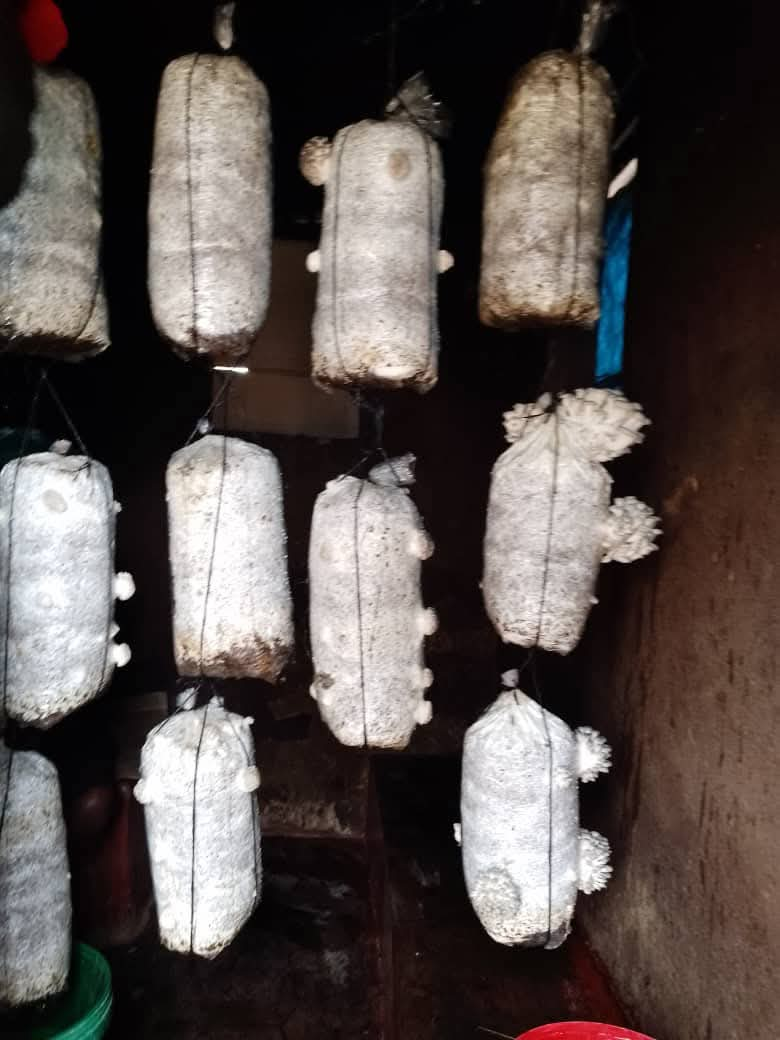
The training provided by ZRBF2 Ushingi inspired Mikirina to begin looking for alternatives. She chose two activities that were less labour-intensive: mushroom production and beekeeping. The most visible sign of that change is her former tobacco barn. Instead of curing tobacco leaves, the structure now serves as a mushroom production hub.
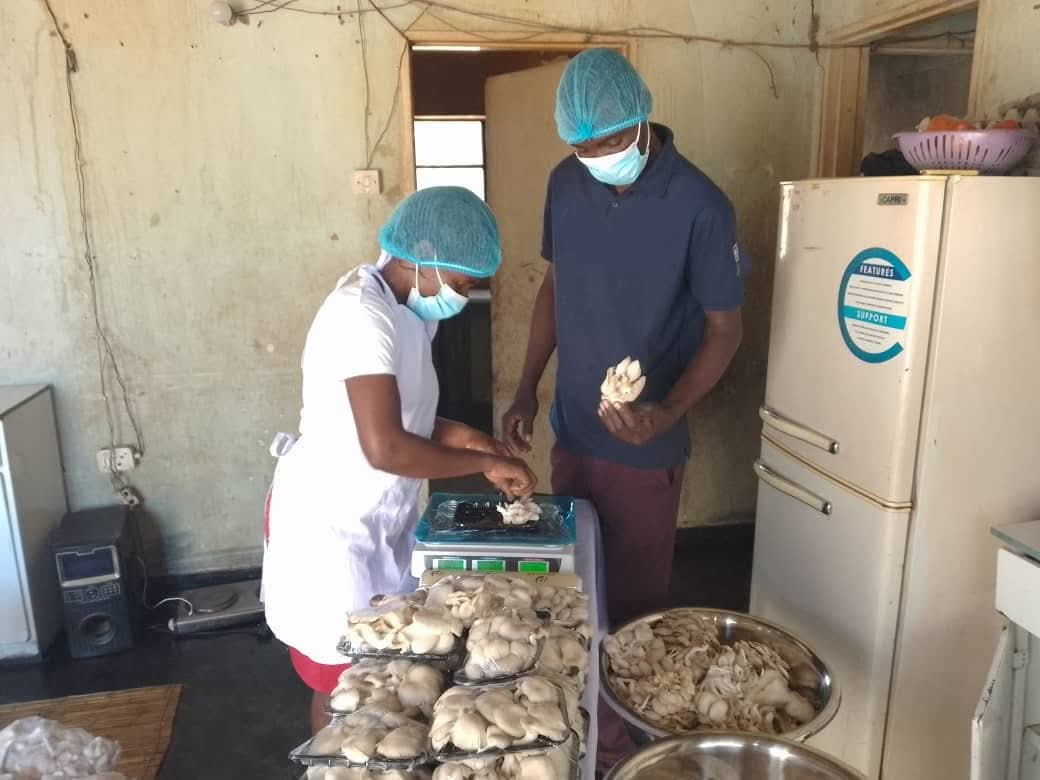
The shift is already producing practical results. Mikirina earns enough money to send her children to school, feed her family and invest in a poultry business, thereby diversifying her income sources. Mushrooms have become a viable cash crop for her household, turning an old tobacco asset into a source of income for education, food and further livelihood investment.
Her experience connects with a wider transition underway in Hurungwe and other districts, with more farmers realizing significant financial benefits from mushroom farming. Between August 2023 and June 2025, mushroom farmers across Hurungwe generated a cumulative amount of US$ 3,775 from 755 kg of fresh produce sold at US$ 5 per kilogram. This development has seen more tobacco barns being converted into mushroom hubs.
Mushroom farming is also providing an agricultural advantage where mushroom substrate is being used to improve soil fertility for farming vegetables. Equipped with these skills, Mikirina and other farmers can now get quick returns from mushroom production, recycle crop waste and generate income throughout the year.
In Hurungwe, the answer to the livelihood and climate resilience question is taking shape inside a former tobacco barn. The building has not disappeared, but its purpose has changed. It now represents a practical possibility: using existing farm assets to build a livelihood beyond tobacco.
Mikirina now earns enough money to send her children to school, feed her family and invest in a poultry farm.